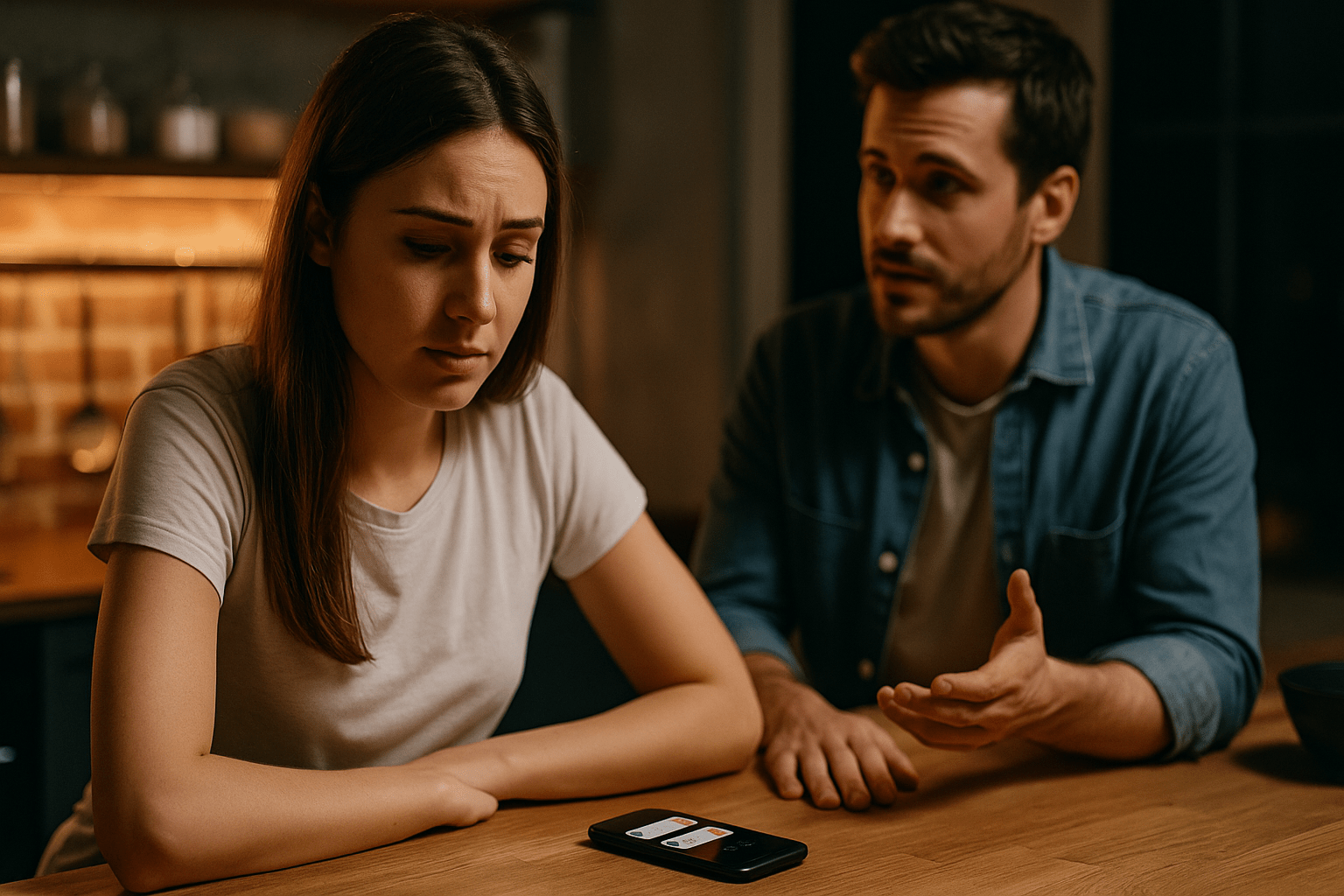
“I saw my girlfriend talking to another guy, even though we were together.
I was furious, but even after the breakup, I can’t let go. Is there a way to make her regret it?”
Among countless Reunior cases, cheating-related breakups consistently reveal a mix of emotions — anger, betrayal, pride, and lingering affection.
When these collide, people divide into two paths: those who cut ties completely, and those who want to make the other person regret losing them. This article is for the latter.
Even when a relationship collapses due to cheating, understanding the other person’s psychological structure and the principle of PRV (Perceived Relational Value) makes it entirely possible to draw them back in.
1. The background of cheating — relational defense born from anxiety
While it may appear to be a simple act of betrayal, the root of cheating lies in emotional instability. Based on Reunior’s data, most cases of girlfriends cheating fall into three categories:
• Anxiety-based self-esteem — preparing in advance out of fear of getting hurt
• Curiosity — seeking novelty or self-affirmation through new emotional stimulation
• A sense of deficiency — feeling her boyfriend no longer leads or grounds her emotionally
The common thread across all types is the same: an imbalance in PRV. Cheating occurs when one perceives the other’s value within the relationship as lower than their own.
2. The moment the relationship shifts
Even if the man initially holds the center of the relationship, as time passes and emotions deepen, things can tilt toward a Reactive Orientation.
When the man adapts too much to his girlfriend’s moods, compromises his opinions, and prioritizes harmony over authenticity, she subconsciously senses the initiative has shifted to her.
From that moment, her attention starts to drift outward — seeking to maintain the imbalance of stability through another connection.
3. Case Study — A classic pattern of collapse
One man shared this story with Reunior: “I found out my girlfriend was in frequent contact with another man. When I confronted her, she said she was just confused. I wanted to end it, but when she cried and begged, I forgave her. Still, she didn’t cut contact completely.”
At first, he expressed anger and set boundaries. But faced with her tears, he wavered again, losing his emotional center and shifting into Reactive Orientation — acting based on her responses. From then on, the relationship didn’t recover; it entered emotional chaos. She gained the conviction that ‘he can’t actually leave me,’ and the balance of PRV collapsed completely.
4. How emotional reactions make things worse
When a man gets angry or repeatedly interrogates a cheating partner, she actually feels she holds the upper hand. The PRV axis — power, responsibility, and value — shifts entirely to her side.
Conversely, when you control your emotions and remain silent, her expectations are shattered. Her perception becomes unsettled: “Why isn’t he reacting? Did he really walk away?” That uncertainty is the turning point where perception begins to shift.
5. The key to regaining attraction — restoring PRV
What triggers regret and renewed attachment after cheating isn’t persuasion or emotional displays — it’s restoring the PRV he once lost.
By not reacting impulsively and maintaining your daily rhythm, she begins to feel the weight of loss.
At that point, don’t try to guess what she’s thinking. Each time that question arises — “What’s going through her mind right now?” — redirect that energy toward rebuilding your own PRV.
6. Reunior’s perspective
Cheating isn’t just betrayal — it’s the product of a relationship where PRV has been distorted.
Reconciliation doesn’t begin with the other person; it begins with reestablishing your own stance.
Silence, distance, and consistency — these are the simplest yet most powerful signals that make someone reevaluate your value.
When you act from composure rather than emotion, your partner experiences a new kind of distance — one they can’t control. That’s the exact moment PRV begins to rise again, and only then does the relationship naturally move back toward balance.